
EMERGENCY MEDICATION WHEN YOU NEED IT
Mobile Phone Case with Integrated Auto-Injector
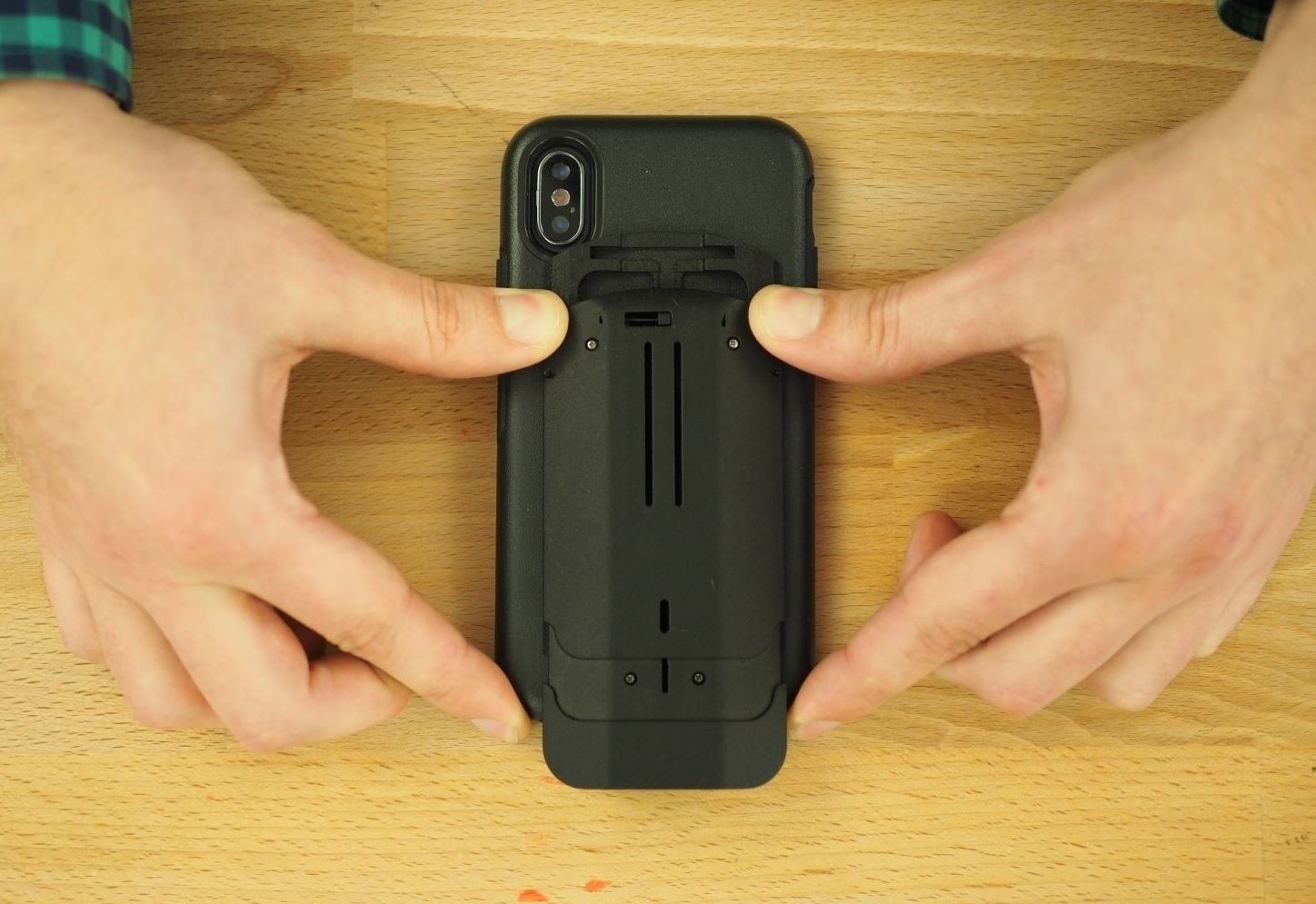
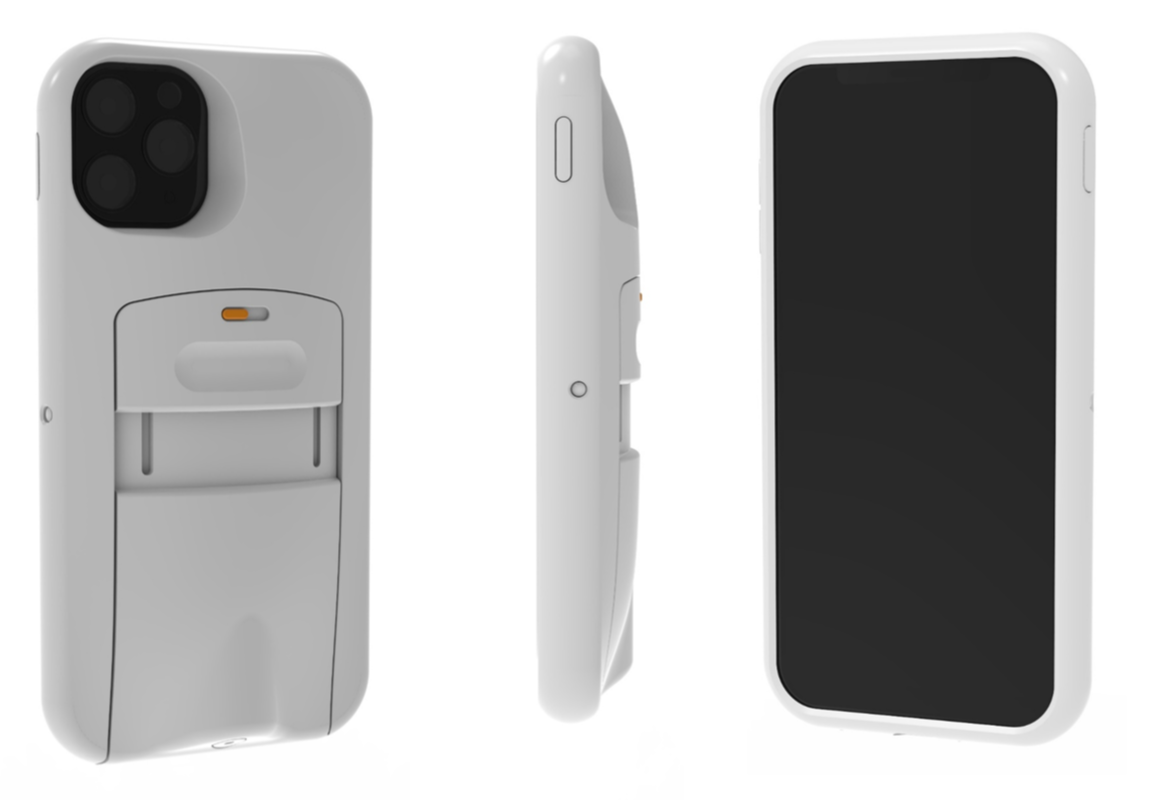
Archimedic collaborated with Thomas Jefferson University (TJU) in the development of a compact autoinjector integrated into a cellphone case. This drug delivery platform is intended for medical emergencies, such as allergic reactions and overdoses.
CONFIGURATION DEVELOPMENT
Safety Focused Use Cases
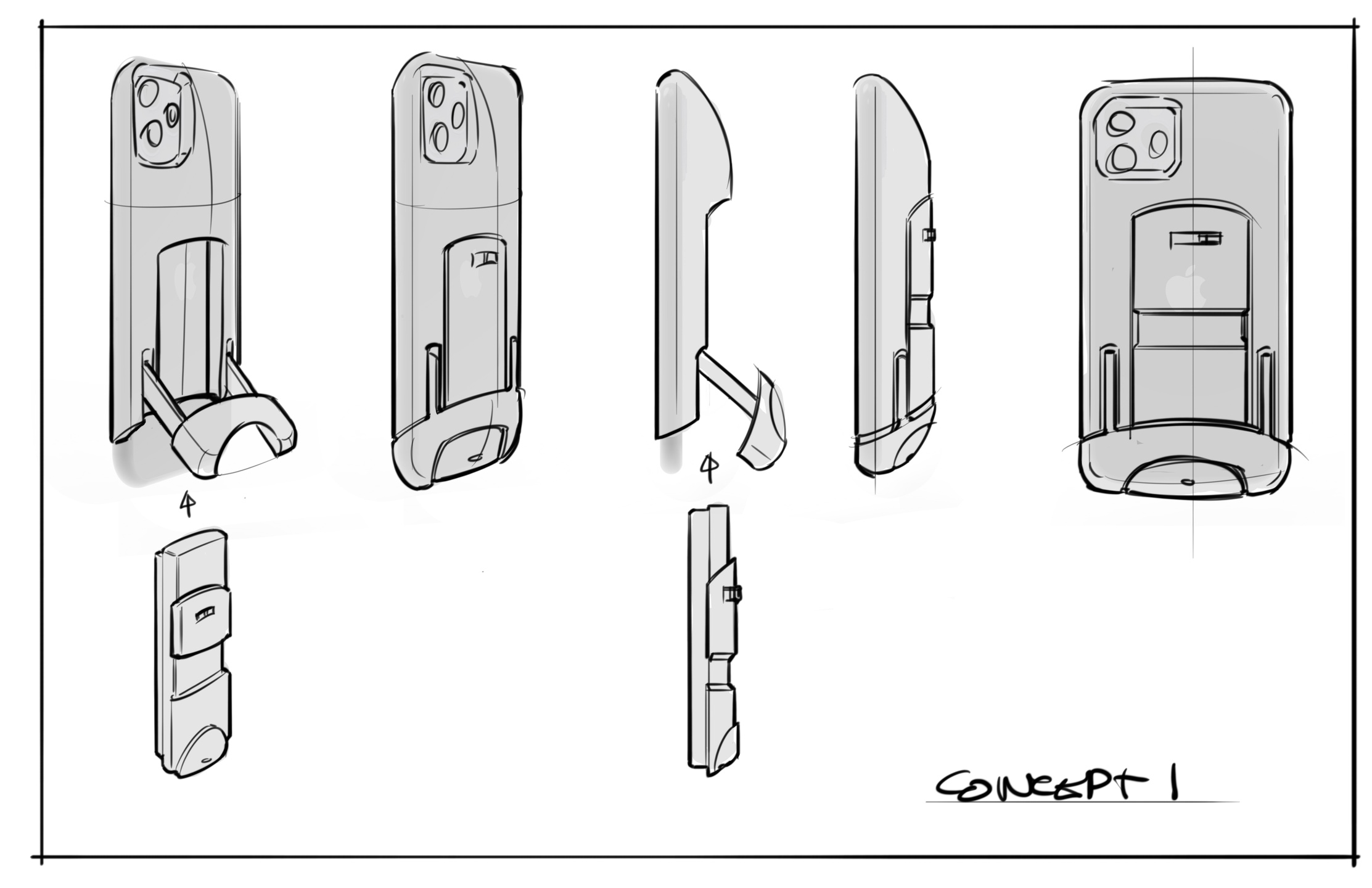
The project started by exploring various use cases to activate the autoinjector while mitigating any usability risks. Several concepts were explored at a sketch-level before landing on the primary direction.
SEQUENCING DEVICE ACTUATIONS
Mechanism Development
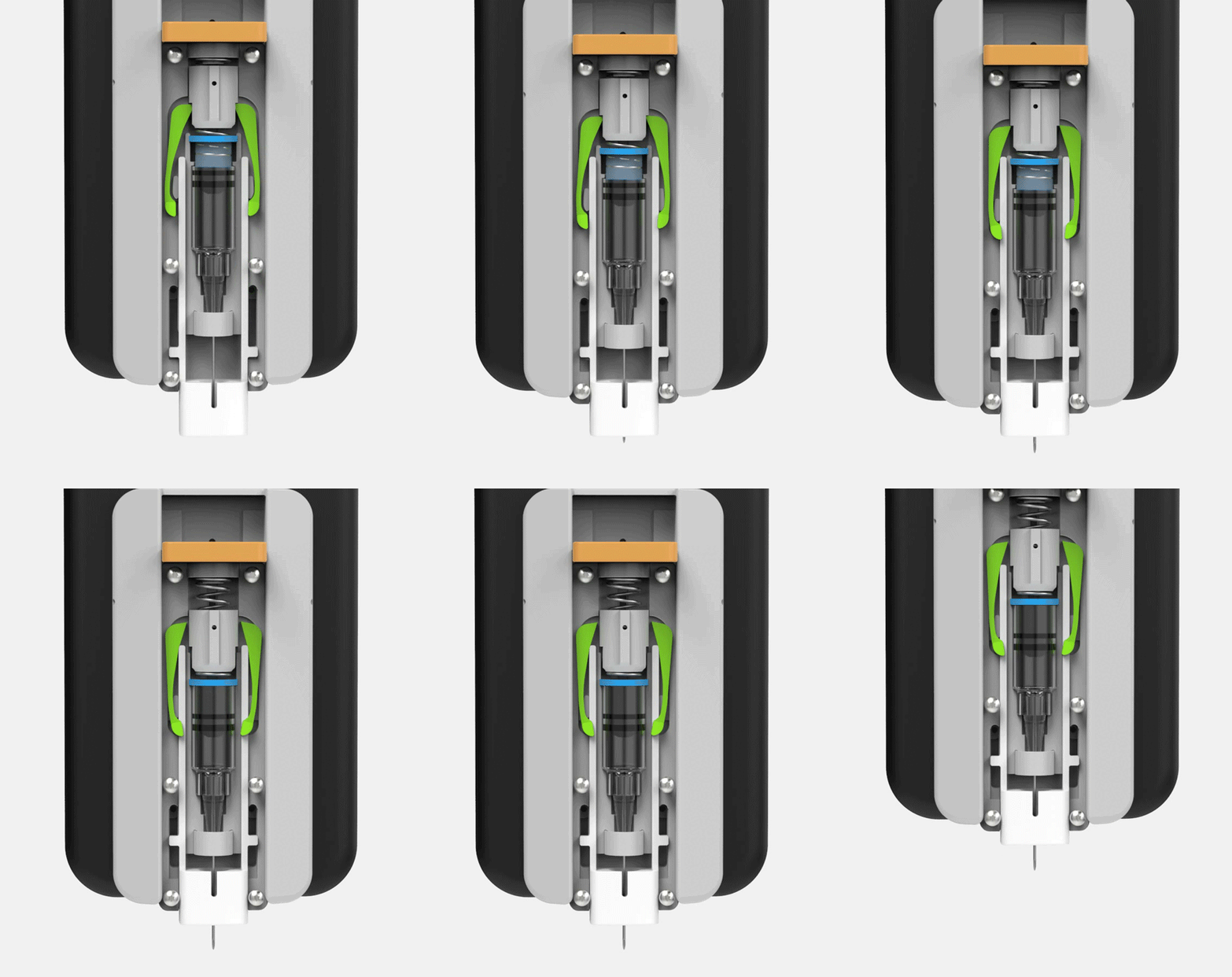
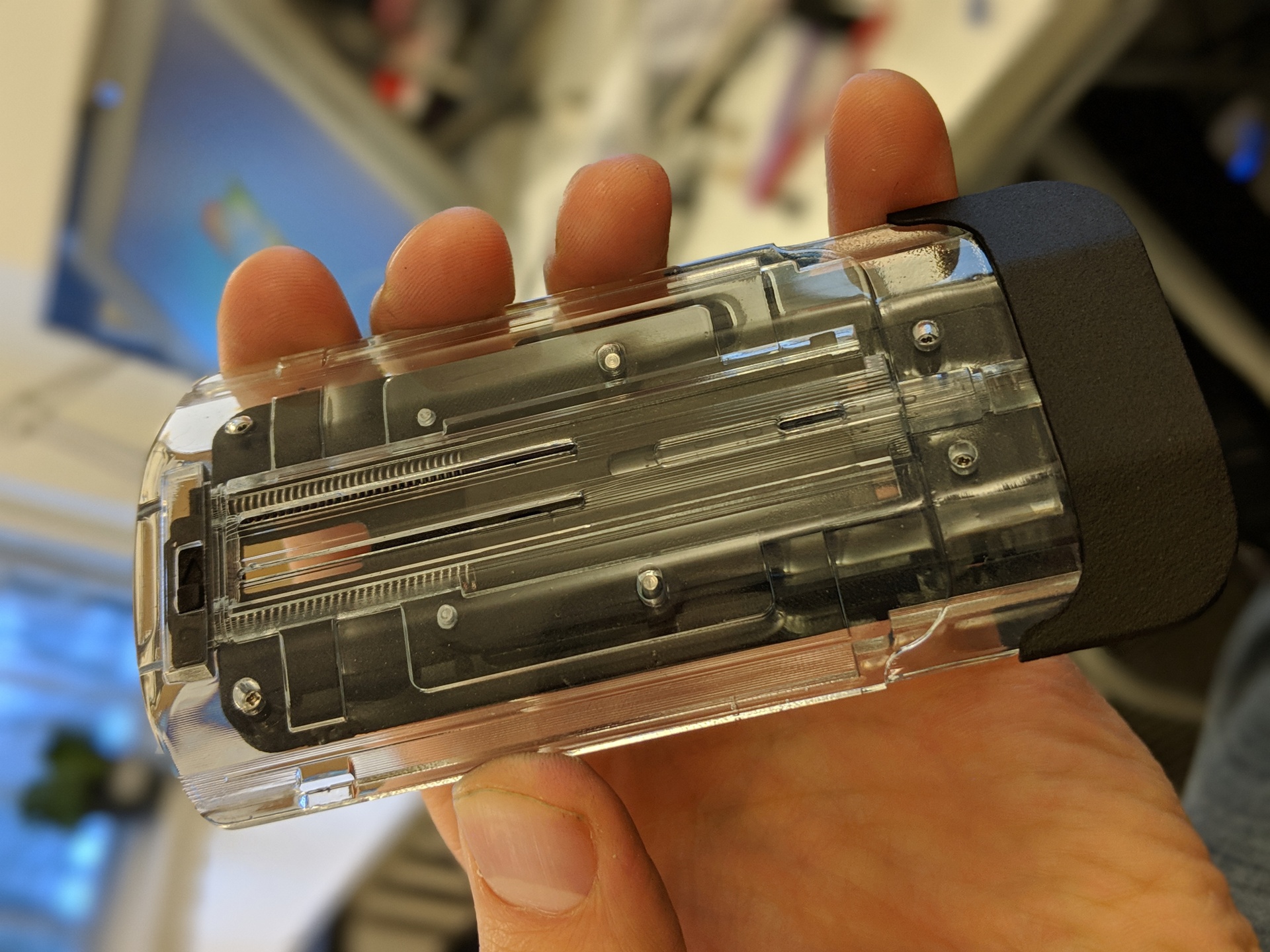
Next, a mechanical layout was constructed to define the required actuations from injection through medication dispensing, and needle retraction. These mechanisms were constructed through dynamic computer-aided design (CAD) models and analyzed through simulated motion studies.
ISOLATING FEATURES AND SUBSYSTEMS
Subsystem Prototyping
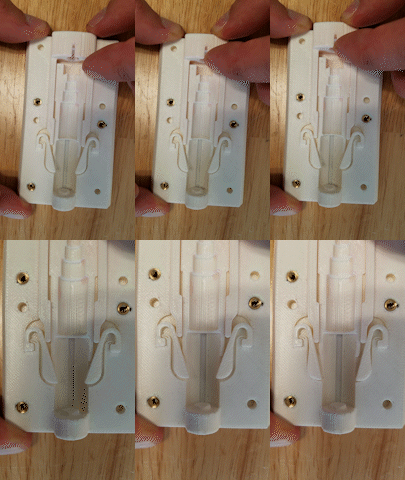
To evaluate key features and functionalities, we isolated critical subsystems (such as latching details) and built iterative rapid prototypes until the functionality was reliably achieved.
CHOOSING A MARKET VIABILE PATH
Go-to-Market
A driving vision for the device was that it is integrated with a smartphone such that patients never leave home without their auto-injector. Designing the device as being fully integrated with a smartphone case was ideal from a design and integration perspective.
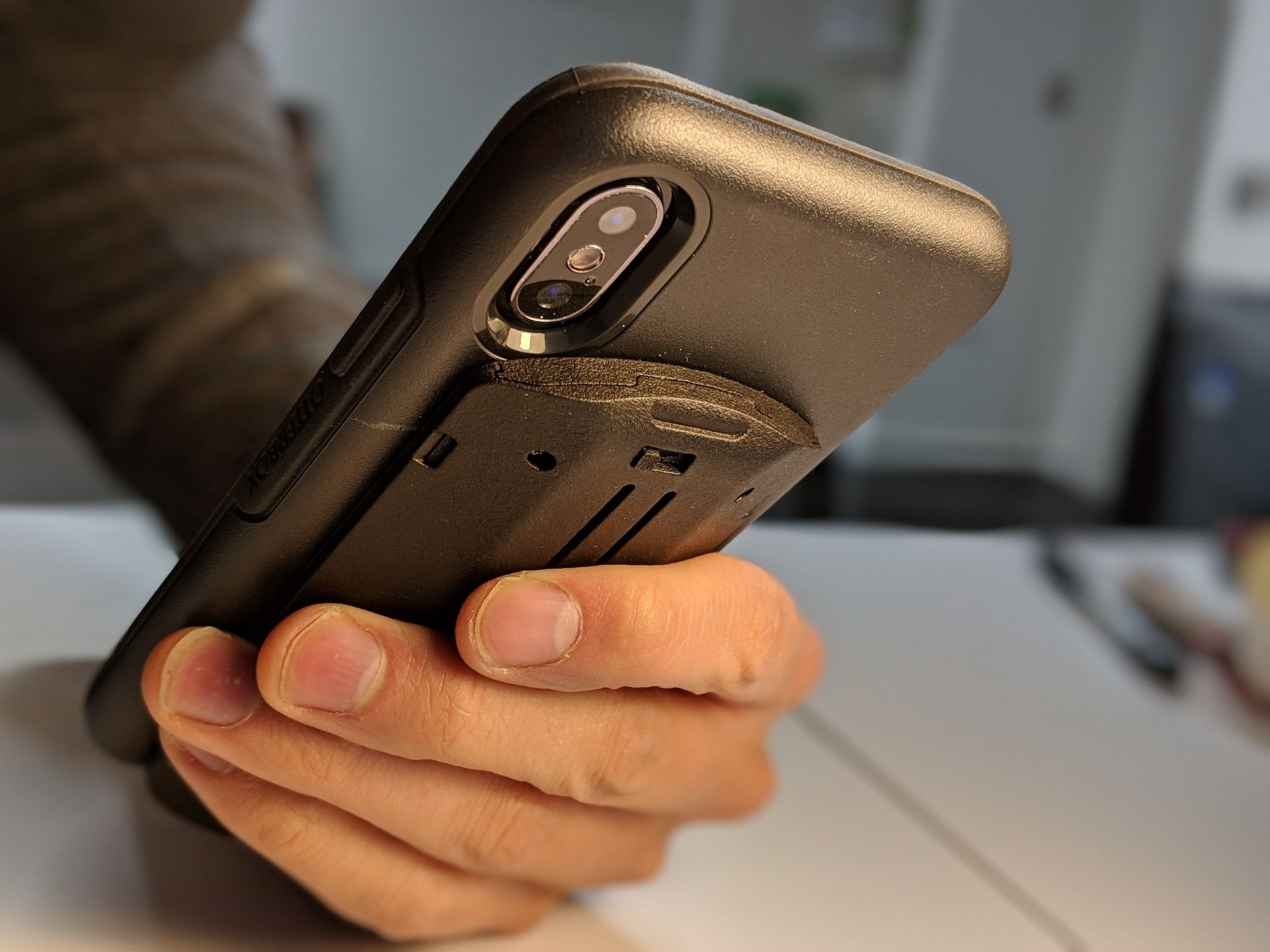
However, this proved impractical given the breadth and changing landscape of smartphone shapes and sizes. A modular design was subsequently pursued, which would attach to a standard case via an adhesive patch.
FUNCTIONAL TESTING
Prototyping & Testing
Various prototypes were developed to achieve the desired performance of the modular auto-injector design. Iterations focused on miniaturization of the mechanisms and achieving critical injection force and speed design inputs. High speed cameras, thermal monitoring, and ballistic gels were used in the testing process.

CHIEF MEDICAL OFFICER
Edmund Pribitkin, MD, PhD
"Partnering with Archimedic was extraordinarily gratifying—their engineering know-how brought our product from patent to prototype in record time and with refinements that will improve patient safety and increase consumer adoption."
INSPIRED BY PERSONAL EXPERIENCE
Empowering a Clinical Visionary
This brief video shares Dr. Edmund Pribitkin's vision for the Epicase and how we worked together in making it a reality. Note, this video illustrates an early prototype of the Epicase device, developed by Smithwise, which later became Archimedic through a merger.
Ready to discuss your project?
Click the link below to see how we start the conversation and explore collaborations.
GET STARTED


